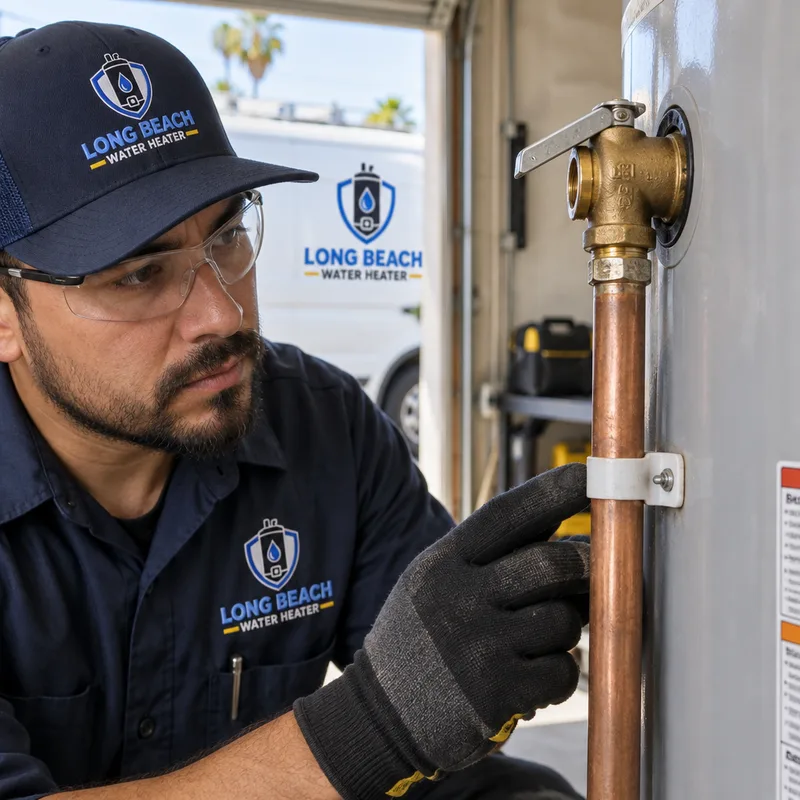
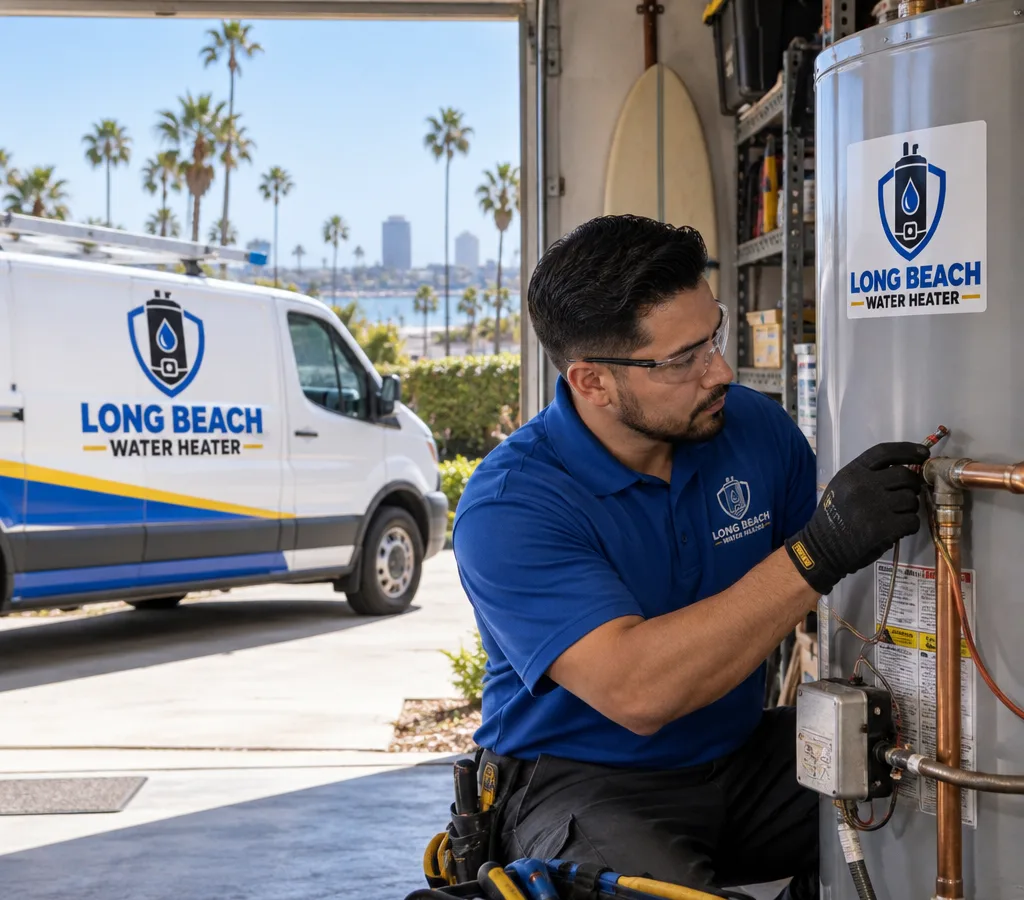
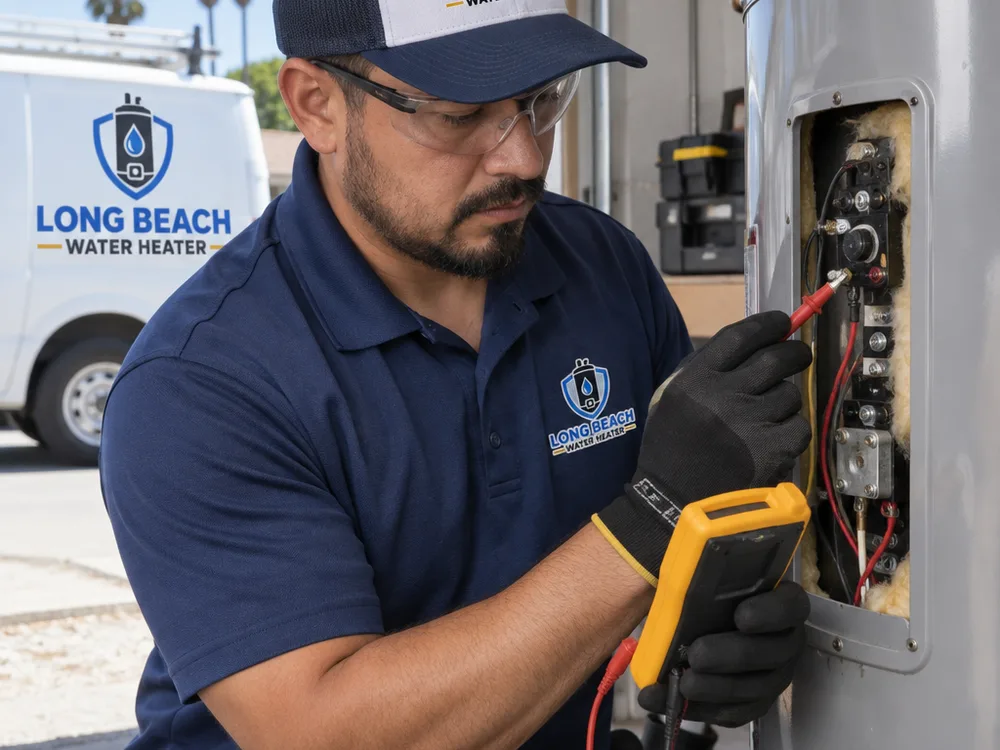
Technician working at a residential water heater in a garage-style utility area, checking connections and controls during a repair visit

Water heater repair · Lakewood

Water Heater Repair Lakewood

Get hot water back fast with licensed technicians, clear options, and repairs that address the cause, not just the symptom.

✓Gas and electric diagnosis

✓Clear repair options

✓Leak-source checks

✓Same-day service when available

Local repair support

Fast, dependable water heater help in Lakewood

When hot water stops, you feel it right away: cold showers, dishwashers that cannot finish properly, and laundry that never seems clean. Our team at Long Beach Water Heater provides water heater repair Lakewood homeowners and property managers can count on for the problems that actually disrupt your day: no hot water, inconsistent temperature, leaks around the tank, tripped breakers, pilot issues, and strange popping or rumbling noises.

Lakewood sits close to Long Beach, and many homes in the area share similar water heater setups: tank units installed in garages, closets, or exterior enclosures, often paired with older gas lines, earthquake strapping, and venting that has to be kept safe and code-correct. We arrive ready to troubleshoot quickly, explain what failed, and give you a straightforward plan before any work starts.

If you are comparing providers across nearby cities, our core service focus is the same as on our main water heater repair service: diagnose accurately, repair safely, and leave you with stable hot water and a clean, dry install area.
Request a Callback

Symptoms and likely causes

What we repair (and what those symptoms usually mean)

✓

No hot water or runs out too fast

Common causes include a failed heating element (electric), a bad thermostat, a blown fuse or tripped breaker, a gas control valve problem, or burner/pilot issues. We verify power or gas supply first, then test the components that actually control heating.

✓

Leaking at the tank or fittings

Some leaks come from fittings, nipples, the temperature and pressure relief (TPR) valve line, or the drain valve. Tank corrosion is different: once the tank itself is leaking, replacement is usually the practical fix. We identify the leak source before recommending next steps.

✓

Odd noises: popping, rumbling, sizzling

Noise often points to sediment buildup on the bottom of the tank or around an element, which can cause overheating and efficiency loss. We check for safe flushing options and inspect for heat damage to components.

✓

Water too hot, too cold, or swings in temperature

Temperature instability can be a thermostat issue, a failing gas valve, cross-connection or mixing problems, or dip tube failure in older tanks. We test temperature output and control behavior, then confirm the safest correction.

✓

Pilot light will not stay lit (gas)

This may involve the thermocouple/thermopile, burner airflow, venting/draft concerns, or a failing gas control. We check combustion safety and venting basics as part of a proper repair.

✓

Rusty water or metallic smell

Discolored hot water can point to tank corrosion or an anode rod that is used up. We help you weigh a targeted repair (when the tank is still sound) versus replacement when corrosion is advanced.

Request a Callback

Cause-focused diagnosis

Water heater service Lakewood: how we troubleshoot

A good repair starts with the right checks in the right order. For electric units, we verify supply voltage at the disconnect or breaker panel and test thermostats, elements, and high-limit controls. For gas units, we inspect for safe combustion conditions, confirm proper ignition and burner operation, and evaluate venting and draft at the water heater.

We also look beyond the heater itself. A wet pan, a dripping discharge tube, or a slow leak at a flex connector can mimic a tank leak. A recirculation line, a mixing valve, or a plumbing cross-connection can create hot-and-cold swings that get blamed on the heater. You get a clear explanation of what failed, what we tested to confirm it, and what options make sense for your situation.

Because many Lakewood installations are in garages, we pay close attention to access, clearances, and protection of nearby walls and stored items. At the end of the visit, you should know what was repaired, what to watch for next, and whether any preventive steps would reduce the chance of another outage.

Request a Callback
Close-up of a technician testing an electric water heater element and thermostat with a multimeter and inspecting wiring under the access panel during diagnosis

From triage to verification

Our repair process (what to expect on a service visit)

Request a Callback
01

Triage and safety checks

We start by confirming whether the issue is gas, electric, plumbing, or venting related. For gas units, we prioritize safe operation and shut down the system if we see signs of unsafe combustion or venting.

02

Pinpoint diagnosis

We test the components that control heating and temperature and track down the exact leak source when water is present. You get a plain-language explanation of the failure.

03

Repair options and pricing

We lay out the repair choices, what each one includes, and the practical tradeoffs. If the tank condition makes repair a poor bet, we will tell you and explain why.

04

Complete the repair and verify operation

After the repair, we verify recovery, temperature control, and leak-free connections. For gas units, we confirm stable burner operation.

05

Clean up and next-step guidance

We leave the area tidy and share simple maintenance pointers, such as keeping the area around the heater clear and watching the TPR discharge tube for any new dripping.

Repair pricing

How Much Does Water Heater Repair Cost in Lakewood?

Water heater repair in Lakewood typically ranges from about $200 to $900, depending on whether it is a straightforward component swap or a more involved diagnosis and repair. Small repairs like replacing a thermostat, heating element, or a leaking valve/fitting are often on the lower end, while gas control valve work, ignition issues, or multiple failing parts can push the price higher.

Your final cost depends on heater type (gas vs. electric), accessibility, age/condition of the tank, whether there is active leaking, and the specific part required. Exact pricing is confirmed after an on-site diagnosis so the repair matches what your system actually needs.

Request a Callback

Equipment and home-fit details

Repair work examples (what we document and check)

Detailed view of a temperature and pressure relief valve and discharge pipe being inspected for proper routing and signs of leakage
Technician in a garage utility space performing a leak check at water heater flex connectors and the shutoff valve after a repair
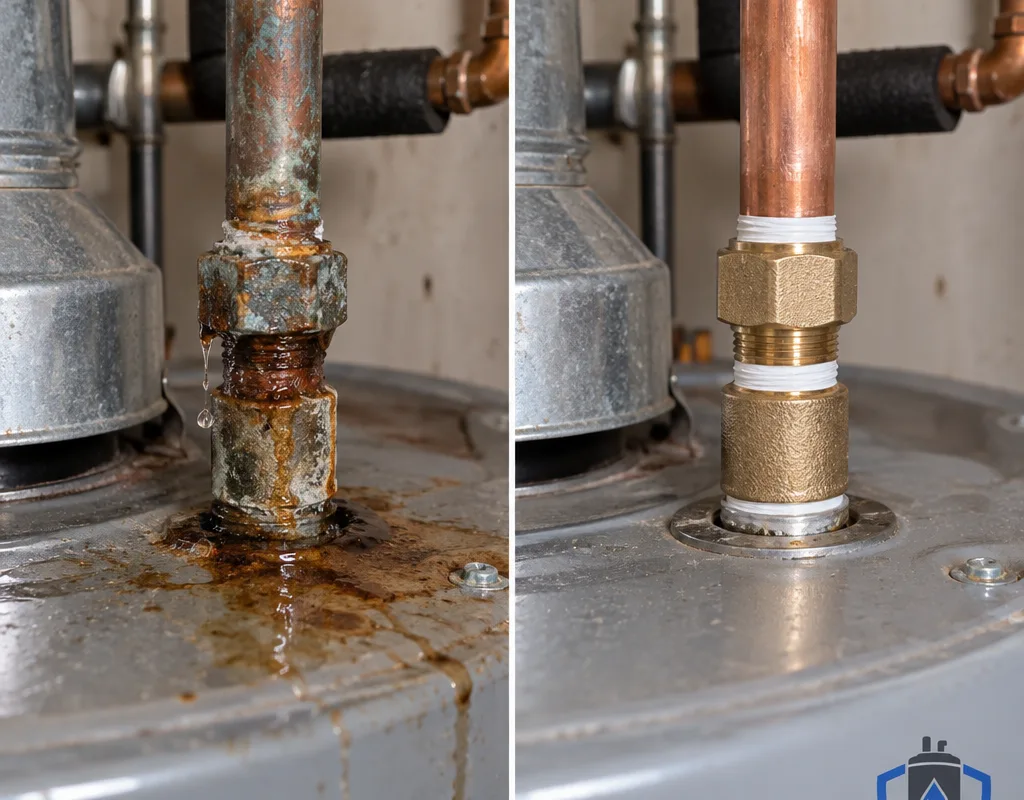
Side-by-side comparison of a corroded leaking water heater connection before repair and the same connection after replacement with clean properly sealed fittings

Practical answers

Water heater repair FAQs for Lakewood homeowners

Do you handle water heater repair in Lakewood for both gas and electric units?

Yes. We troubleshoot and repair both gas and electric tank-style water heaters, including the common failure points like thermostats, elements, gas controls, pilot/ignition components, and leaking valves or fittings.

If my water heater is leaking, is it always repairable?

No. A leak at a fitting or valve is often repairable, but a leak from the tank body itself usually means the tank has failed and replacement is the practical option. The key is identifying exactly where the water is coming from before choosing a repair.

What should I do while waiting for water heater service in Lakewood?

If you see active leaking, shut off the cold-water supply to the heater and avoid using hot water until it is assessed. For electric units, turn off power at the breaker; for gas units, turn the gas control to the off position if you can do so safely. If you are unsure, leave the system as-is and keep the area clear so the technician can access the unit quickly.

Why is my water heater making popping or rumbling noises?

Popping or rumbling commonly comes from sediment buildup in the tank, which traps heat and causes localized boiling. We check tank condition, discuss safe flushing options when appropriate, and confirm whether the noise indicates simple maintenance needs or a component being damaged by overheating.

How do you decide between repairing and replacing a water heater?

We look at the failure type (component vs. tank), the condition of the tank and connections, and whether the repair is likely to hold up. When the tank is sound and the issue is a replaceable part, repair makes sense; when the tank is corroded or leaking, replacement is usually the better use of your money.

Can temperature swings be caused by something other than the water heater?

Yes. Temperature swings can be caused by mixing valves, recirculation setups, plumbing cross-connections, or even a failing shower valve cartridge that lets hot and cold mix. We check for the obvious heater-side causes first, then flag signs that point to a plumbing-side issue.

Do you provide same-day water heater repair in the Lakewood area?

When scheduling and parts availability allow, yes. The fastest way to confirm timing is to send details about the symptoms (no hot water, leak location, noises, gas or electric) so we can prioritize the right appointment window.

Schedule a repair visit

Need hot water back today?

Describe what your water heater is doing, where it is installed, and whether it is gas or electric. We will confirm an appointment time, diagnose the problem, and give you a clear repair plan for your Lakewood home.